Occupational Therapy Services: Helping Children Build Confidence & Independence
For many families, it can be hard to know when your child “just needs time” and when a little extra support might help. If your child is finding everyday tasks like dressing, writing, joining in play, or coping with busy environments more challenging than expected, occupational therapy may be a helpful next step.
At Brave Bodies, our Paediatric Occupational Therapists support babies, children, teens and young adults (0–25 years) to participate in the everyday “jobs” of childhood, playing, learning, looking after themselves, and being part of family and community life.
Through individualised, play‑based sessions and practical strategies for home and school, we focus on building skills, confidence and independence in ways that feel meaningful for your child and your family.
Important: The information below is general in nature and does not replace individual medical or allied health advice. If you’re concerned about a child’s development, please seek personalised advice from a qualified health professional.
Understanding Occupational Therapy
Occupational therapy (often called OT) is about supporting people to do the everyday activities, or “occupations”, that matter to them.
For children and young people, these occupations include:
● Looking after themselves (dressing, toileting, mealtimes, hygiene)
● Playing and socialising
● Participating in learning at school and childcare
● Moving around safely and confidently in their environment
● Building the foundations for independence in adolescence and early adulthood
A Paediatric Occupational Therapist:
1. Assess your child’s strengths, challenges and how they manage day‑to‑day tasks.
2. Works with you to set meaningful, realistic goals (e.g. “getting dressed with less help” or “coping better with noisy classrooms”).
3. Designs a therapy plan that supports progress in ways that fit your child’s interests, personality and environment.
Rather than focusing only on difficulties, OT looks at the whole child, their abilities, preferences, relationships and routines, and aims to support participation in everyday life.
Key Areas of Occupational Therapy for Children and Young People
Occupational therapy covers a wide range of developmental and functional areas. At Brave Bodies, some common focuses include:
Sensory Processing and Regulation
Some children process sensory information (sound, touch, movement, light, taste or smell) differently. They might:
● Be easily overwhelmed by noise or busy environments
● Avoid certain textures (like clothing tags, sand or messy play)
● Seek out lots of movement or pressure (constantly moving, climbing, crashing, jumping)
Our therapists use sensory‑informed, play‑based activities to help children:
● Better understand their own sensory preferences and needs
● Develop strategies to feel calmer and more organised
● Participate more comfortably at home, school and in the community
Fine Motor and Hand Skills
Fine motor skills underpin many everyday tasks, including:
● Holding and using pencils, crayons and cutlery
● Cutting with scissors and manipulating small objects
● Managing buttons, zips and shoelaces
Through activities like drawing, building, crafts and hand‑strengthening games, we support children to:
● Develop grasp, hand strength and finger control
● Coordinate both hands together
● Build confidence in tasks such as handwriting, colouring and dressing
Gross Motor Coordination and Body Awareness
While physiotherapists often take the lead on more complex movement challenges, Occupational Therapists may also support:
● Balance and postural control (sitting upright at a desk, navigating Playgrounds)
● Coordinating both sides of the body for tasks like catching, throwing and climbing
● Body awareness, knowing where the body is in space and moving safely around others
This may involve obstacle courses, climbing, ball games and other fun movement‑based activities.
Emotional Regulation and Behaviour
Big feelings can make everyday tasks harder. Occupational therapy can support:
● Recognising early signs of frustration or overwhelm
● Developing calming strategies and routines
● Using visual supports or structured transitions to reduce anxiety around change
We often weave these skills into play, stories and real‑life situations so children can use them in homes, schools and social settings.
Self‑Care and Daily Routines
Many families seek OT support for everyday routines such as:
● Dressing and undressing
● Toileting and hygiene
● Mealtimes and using cutlery
● Getting ready for school or bed
We break tasks into achievable steps, adapt environments where needed, and build your child’s confidence and independence over time.
The Role of Occupational Therapy in Child Development
Occupational therapy touches several key developmental areas:
1. Physical Development
Through carefully chosen tasks, OT can support:
● Muscle strength and endurance
● Hand and finger strength for fine motor activities
● Coordination and balance needed for play and self‑care
These skills support participation in activities like Playground play, sports, dressing, and managing school tasks.
2. Cognitive and Organisational Skills
OT often uses structured play, routines and problem‑solving tasks to help children:
● Attend to a task for longer periods
● Follow multi‑step instructions
● Plan, start and complete tasks (e.g. finishing a classroom activity or morning routine)
These skills support readiness for learning and daily life organisation.
3. Social and Emotional Development
In individual or small‑group contexts, occupational therapy can help children practise:
● Turn‑taking, sharing and joint play
● Reading non‑verbal cues and adjusting their behaviour
● Coping with disappointment or unexpected change
Supporting emotional regulation and social participation can make classrooms, childcare and community activities feel more manageable and enjoyable.
4. Sensory Integration
For children who experience the world as “too much” or “not enough”, OT provides opportunities to:
● Explore different sensory experiences in a safe, supportive way
● Learn strategies that help them stay calm and focused
● Adjust environments (where possible) to reduce overwhelm or support alertness
This can make everyday settings, such as classrooms, homes and playgrounds, feel more predictable and comfortable.
Potential Benefits of Occupational Therapy for Kids
Every child is different, and we do not guarantee specific outcomes. However, many families seek occupational therapy because they are hoping for:
● More confidence in daily tasks like dressing, writing, or managing school work
● Improved coordination and hand skills for play, learning and self‑care
● Better participation at school or childcare, including sitting, attending and joining in
● Increased independence in age‑appropriate routines
● Strategies to support emotional regulation and sensory needs
Our focus at Brave Bodies is on supporting participation and independence in meaningful life activities, in collaboration with families and other professionals.
How Occupational Therapists Work with Families, Schools and Communities
At Brave Bodies, we believe in “Partnering with Parents, Empowering Children”. Collaboration is at the heart of effective occupational therapy.
We typically:
● Work closely with parents and caregivers
○ Listen to your priorities and concerns
○ Share understandable explanations and practical strategies
○ Co‑create goals that make sense for your family
● Collaborate with educators and support staff (with your consent)
○ Provide suggestions for classroom or childcare environments
○ Share simple strategies that can support participation (e.g. seating, visual supports, movement breaks)
● Coordinate with other health professionals where appropriate
○ For example, paediatricians, physiotherapists, speech pathologists, psychologists and support coordinators
This team approach helps ensure your child experiences consistent, supportive strategies across home, school and the wider community.
Sensory‑Informed, Play‑Based Approaches in Learning and Behaviour
Many children seen in OT experience challenges related to sensory processing. Sensory‑informed occupational therapy aims to support children to:
● Understand what helps them feel “just right” (not too wired, not too flat)
● Use movement, pressure, quiet time or other strategies in a planned way
● Participate more comfortably in group environments like classrooms or childcare
Sessions may include:
● Swinging, jumping, pushing or pulling activities
● Tactile play with sand, playdough, rice or other materials (as tolerated)
● Deep pressure or heavy‑work activities (e.g. carrying appropriate weighted items, animal walks)
These activities are always individualised and used as part of a broader plan to support regulation, not as stand‑alone “fixes”.
Supporting Emotional Development Through Occupational Therapy
Emotional growth is an essential part of every child’s development. Occupational therapy helps children understand emotions, develop coping mechanisms, and build resilience. Through creative and engaging tasks, therapists teach mindfulness, problem-solving, and communication skills.
By addressing emotional challenges early, children can better navigate social relationships and classroom environments, fostering long-term mental well-being.
Encouraging Independence in Everyday Activities
Independence is one of the ultimate goals of occupational therapy. Therapists design personalised strategies to help children perform daily activities with minimal assistance.
Examples include:
● Getting dressed with fewer prompts
● Packing and unpacking their school bag
● Managing lunchboxes and cutlery
● Contributing to age‑appropriate household tasks
Therapists break tasks into smaller steps, remove unnecessary barriers where possible, and celebrate progress at each stage. Even small changes, one extra step completed independently, one less prompt needed, can make a meaningful difference in a child’s sense of capability and confidence.
Where Brave Bodies Provides Occupational Therapy Services
Brave Bodies offers Paediatric Occupational Therapy services for children and young people aged 0–25 years in the South West of Western Australia.
● Clinic locations:
○ Vasse/Busselton – at Latitude Physio 33.7 (Fridays)
○ Dalyellup/Bunbury – at South West Therapy Services (Tuesdays)
● Mobile / outreach services:
○ Busselton
○ Bunbury & Dalyellup
○ Dunsborough
○ Margaret River
We also provide services in some school and community settings via outreach and local partnerships (e.g. Geographe Education Support Centre), where appropriate.
You can explore our services here:
Brave Bodies Services
Paediatric Occupational Therapy | Brave Bodies
Conclusion
Occupational therapy is not just about exercises – it’s about supporting children and young people to live full, fun and meaningful lives, in line with Brave Bodies’ mission to support, empower and celebrate families in our regional community.
Parents, caregivers, educators and therapists all play a vital role in this journey. Together, we can help children develop the skills and strategies they need to navigate their world more independently and joyfully.
If you’d like to discuss whether occupational therapy may be right for your child, you can contact us.
Frequently Asked Questions (FAQ)
1. What age can a child start occupational therapy?
Occupational therapy can support babies, children, teens and young adults (0–25 years). If you have concerns about your child’s development at any age, it is reasonable to seek an OT assessment rather than “wait and see”.
2. Do I need a referral to access occupational therapy at Brave Bodies?
You may not need a referral for privately funded OT sessions. However, certain funding schemes (such as specific Medicare items or other programs) may require a referral from a GP or specialist. Our team can advise you about what is needed for your situation.
3. How long does it take to see changes from occupational therapy?
Progress is individual. Some families notice changes in routines or participation within weeks to months, while other goals take longer. We review goals regularly with you and adjust the plan based on your child’s needs and your feedback.
4. What happens during an occupational therapy session?
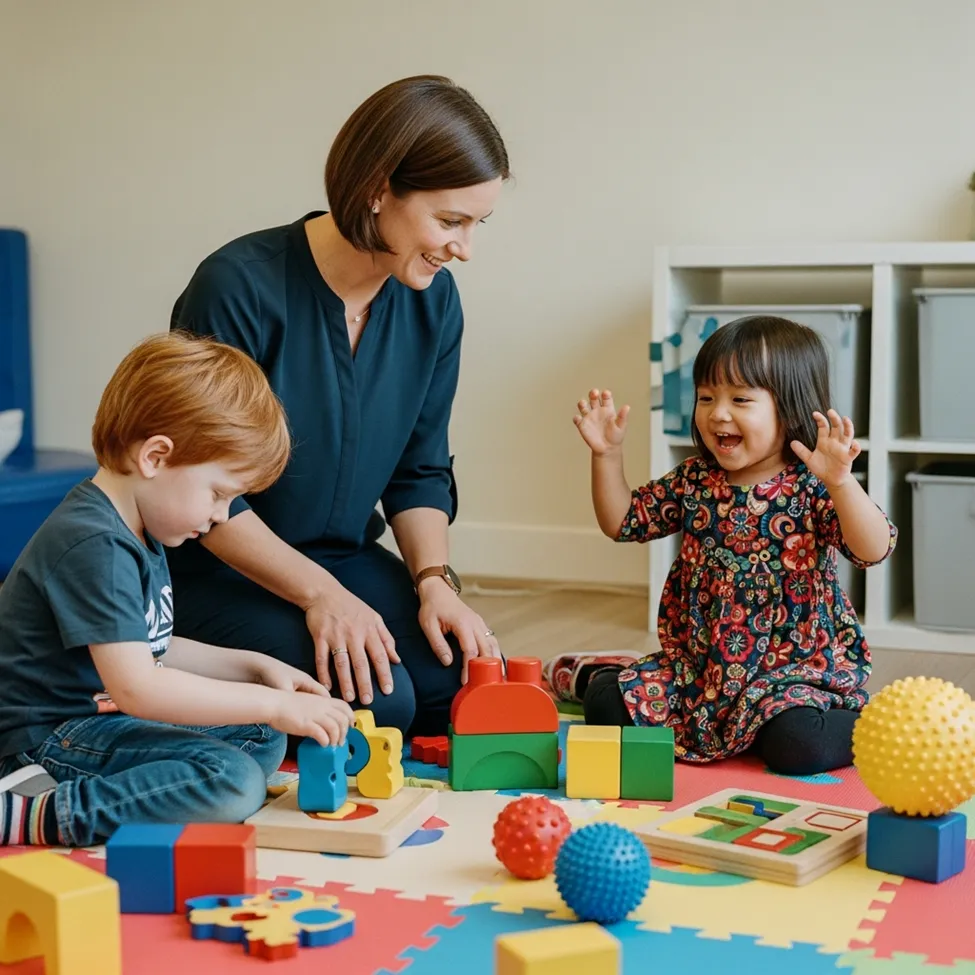
Sessions are usually play‑based and goal‑focused. Depending on your child’s needs, a session may include:
● Fine motor or handwriting activities
● Movement and sensory‑based play
● Practising self‑care routines
● Working on attention, organisation or emotional regulation
Therapists adapt each session to your child’s age, interests and energy level.
5. How often will my child attend occupational therapy?
Frequency varies. Some children benefit from weekly sessions, others from fortnightly or less frequent appointments combined with a strong home and school program. Your therapist will discuss what is likely to be most suitable and sustainable for your family.
6. How can parents support occupational therapy at home?
Parents are key partners. You can help by:
● Following simple home strategies or activity ideas provided by your therapist
● Encouraging independence in everyday tasks (even if it takes a little longer)
● Keeping communication open about what is working well or feels hard at home
We aim to suggest strategies that are realistic and manageable within your daily routines.
7. Can occupational therapy help with school or childcare challenges?
Yes. Occupational therapy commonly supports skills related to classroom and childcare participation, such as:
● Fine motor and pre‑writing skills
● Attention, organisation and transitions
● Sensory regulation in busy environments
● Social participation and play
With your consent, we can also provide information or recommendations to educators.
8. Does occupational therapy provide a diagnosis?
Occupational Therapists do not diagnose medical or developmental conditions (such as autism, ADHD or specific learning disorders). However, OT assessments can highlight patterns of strengths and challenges and, where appropriate, we may recommend discussing findings with your GP or paediatrician.
9. Is occupational therapy covered by NDIS or other funding?
Many families use:
● NDIS funding, where appropriate goals are included in their plan
● Private health insurance, depending on their level of cover
● Private/self‑funded payments
Coverage rules are set by external bodies and can change, so we recommend checking directly with your funding provider. Our team can explain how Brave Bodies bills sessions under different funding arrangements.
10. Where does Brave Bodies provide OT services?
We provide OT services across parts of the South West of WA, including:
● Clinics in Vasse/Busselton and Dalyellup/Bunbury
● Mobile services in Busselton, Bunbury, Dalyellup, Dunsborough and Margaret River.
Current details and availability are listed on our Services page: Brave Bodies Services
11. What if my child struggles to engage during sessions?
Many children feel shy, tired, or unsure in a new environment. Our therapists are experienced in building rapport and adapting activities. If your child is very upset or unwell on the day, we can discuss options such as modifying the session or rescheduling.
12. How do I book an occupational therapy appointment with Brave Bodies?
You can get started by visiting our Services page and submitting an enquiry or booking request: Brave Bodies Services