Struggling With Handwriting or Sitting in Class? How OT and Physio Can Help
Sitting at a desk and learning to write ask a lot of a growing child. They need to support their body, coordinate their hands, control a pencil and follow instructions while managing the distractions of a busy classroom.
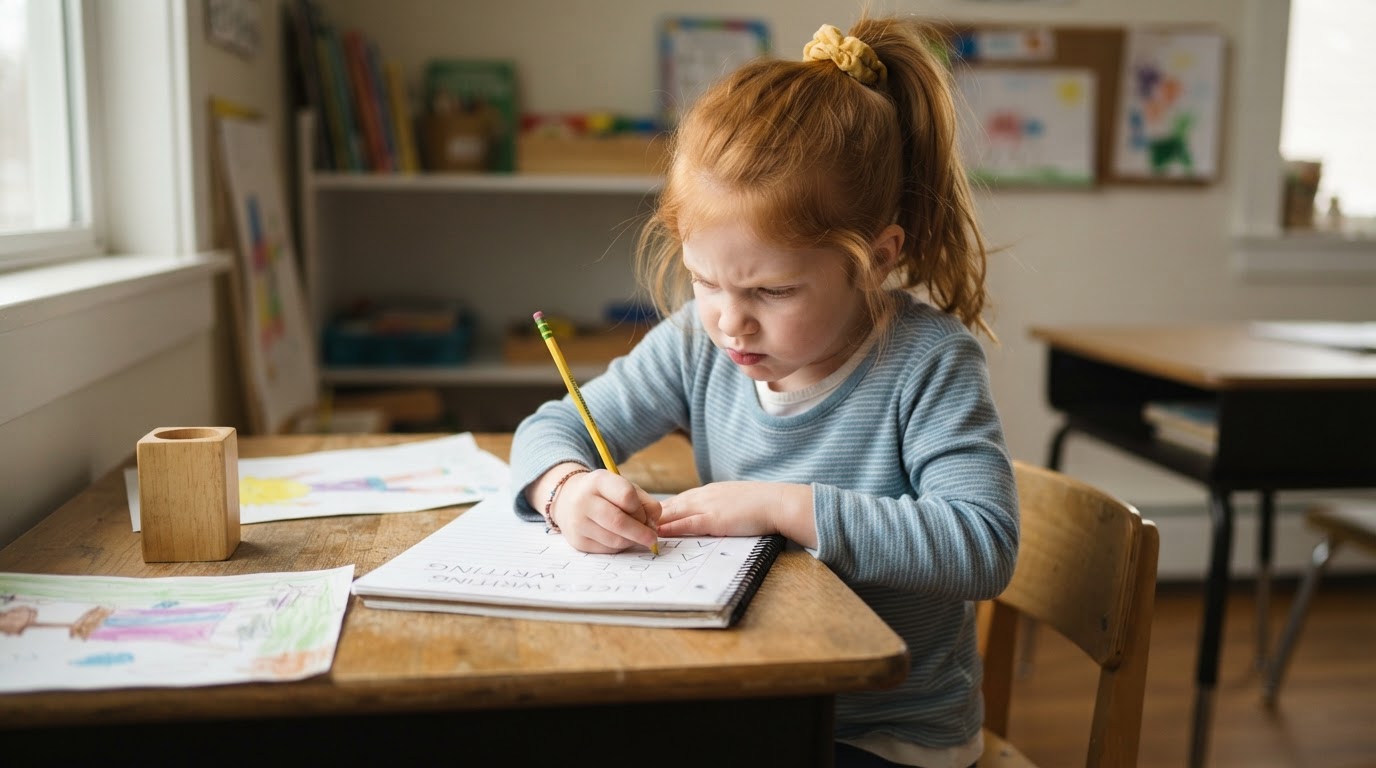
For some children in pre-primary and early primary school, this takes considerable effort. Tired hands, slumping over the desk or avoiding writing can be clues that part of the task feels difficult.
Understanding whether strength, coordination, seating or sensory needs are contributing can help you find practical ways to make learning more comfortable and manageable. Paediatric occupational therapy or paediatric physiotherapy can support your child to build the skills and confidence they need to get more out of learning, play and everyday activities.
Why Is My Child Finding Classroom Activities Difficult?
School brings together many skills: sitting comfortably, listening, using a pencil, following instructions and managing a busy environment.
When one part feels difficult, taking part can become harder. You might notice your child:
Leans heavily on the desk or props their head up.
Changes position frequently during table activities.
Complains of tired hands when drawing or writing.
Avoids colouring, cutting or written work.
Finds playground climbing or ball games difficult.
Becomes upset or withdraws when tasks feel challenging.
These observations do not identify a diagnosis. Difficulty participating can involve physical effort, sensory needs, attention, learning demands or the classroom setup.
Understanding when the difficulty happens is more useful than repeatedly asking a child to sit still or try harder.
How Are Strength and Handwriting Connected?
Handwriting involves the whole body. The trunk helps support sitting, the shoulders provide a stable base for arm movement, and the hands make small, controlled movements.
If maintaining a comfortable position takes considerable effort, a child may tire during writing. Their chair, desk height and foot support can also affect how comfortably they work.
Handwriting additionally involves coordination, pencil control, letter formation and understanding the task. Strength is one part of the picture.
The Royal Children’s Hospital’s hand and finger strength resource explains how everyday play can help develop strength and endurance used in activities such as writing.
Does My Child Need OT or Physio for Handwriting?
There is overlap between the professions. The best starting point depends on what is making the activity difficult.
How Paediatric Physiotherapy Can Help
A paediatric physiotherapist can assess the movement skills supporting classroom and playground activities.
This may include:
Trunk and shoulder strength.
Sitting balance and postural endurance.
Arm and hand strength.
Coordination during climbing, throwing and catching.
For a child who finds both desk activities and playground movement tiring, looking at these physical foundations may be helpful.
How Occupational Therapy Can Help
Paediatric occupational therapy focuses on participation in everyday activities, including learning and play.
An OT may assess handwriting, fine motor coordination, pencil use, seating, sensory needs and classroom routines. Support might involve practising letter formation, adjusting a task or helping a child manage transitions between activities.
Some children benefit from both OT and physiotherapy, while others need support from just one. A discovery call can help families decide where to start, with an assessment providing a clearer picture of their child’s needs.
What If My Child Struggles to Sit or Engage in Class?
The first question is what makes participation difficult for that child.
Are they uncomfortable? Does their hand hurt? Is the room overwhelming? Are the instructions difficult to follow? Do they need more movement opportunities?
Brave Bodies works with families to understand these patterns and identify practical goals. That might mean participating comfortably in a short group activity, drawing without hand fatigue or managing classroom materials more independently.
Where appropriate, we can work with teachers and other professionals. Broader concerns about attention, development or learning may also need discussion with your child’s GP or paediatrician.
Practical Ways to Support Your Child at Home
Keep activities enjoyable and manageable. Useful starting points include:
Active play: supervised climbing, crawling games and ball play.
Hand activities: playdough, construction toys and suitable craft materials.
Comfortable seating: check that feet are supported and the table suits your child.
Short writing opportunities: make a birthday card, label a drawing or write a shopping item together.
Breaks: pause when your child becomes tired, uncomfortable or frustrated.
Different pencil grips can work well. The Royal Children’s Hospital’s pencil grip advice emphasises comfort and functional writing rather than how a grip looks.
Play supports developing skills, while handwriting also needs appropriate teaching and practice. Ask for guidance if pain, fatigue or avoidance persists.
Local Support in Busselton, Margaret River and Bunbury
Brave Bodies was founded by physiotherapists Ruan and Tarryn to improve access to paediatric support across South West WA.
We begin by listening, assessing your child’s needs and setting meaningful goals together. We also consider what your family can realistically manage at home.
School visits can be discussed, depending on your child’s needs, therapist availability and arrangements with the school.
Contact Brave Bodies for a free discovery call to discuss OT or physio for your child.
Frequently Asked Questions
1. Can physiotherapy help with handwriting, or does my child need OT?
An occupational therapist is usually a useful starting point for handwriting concerns, including pencil control, fine motor skills and participation in writing tasks. Physiotherapy may also help when posture, strength, balance or physical endurance contributes to difficulty sitting and working. Some children benefit from both, depending on their individual needs.
2. Does difficulty sitting still mean my child has weak core muscles?
No. Movement needs, discomfort, attention, sensory factors and task demands can all contribute. Assessment helps identify suitable support.
3. Can Brave Bodies attend my child’s school?
Yes, school visits are an option. Contact the team to discuss suitability, availability, school agreement and any relevant travel or funding arrangements.
4. What causes poor handwriting in children?
Handwriting difficulties can involve pencil control, coordination, letter formation, strength or endurance. Seating, attention and sensory needs can also affect how comfortably a child writes. An assessment helps identify which parts of the task are difficult, rather than assuming they simply need more practice.
5. Can I help my child sit and focus during activities at home?
Yes. Start with a comfortable chair, supported feet and a table at a suitable height. Reduce distractions and keep activities short, with opportunities to move between tasks. Drawing, puzzles or a game your child enjoys can make taking part more appealing.
Notice when they become tired, uncomfortable or frustrated, and offer a break. The aim is comfortable participation, rather than sitting completely still. If difficulties persist, an OT or physiotherapist can help identify suitable strategies.