Why Is My Child Struggling With Sport?
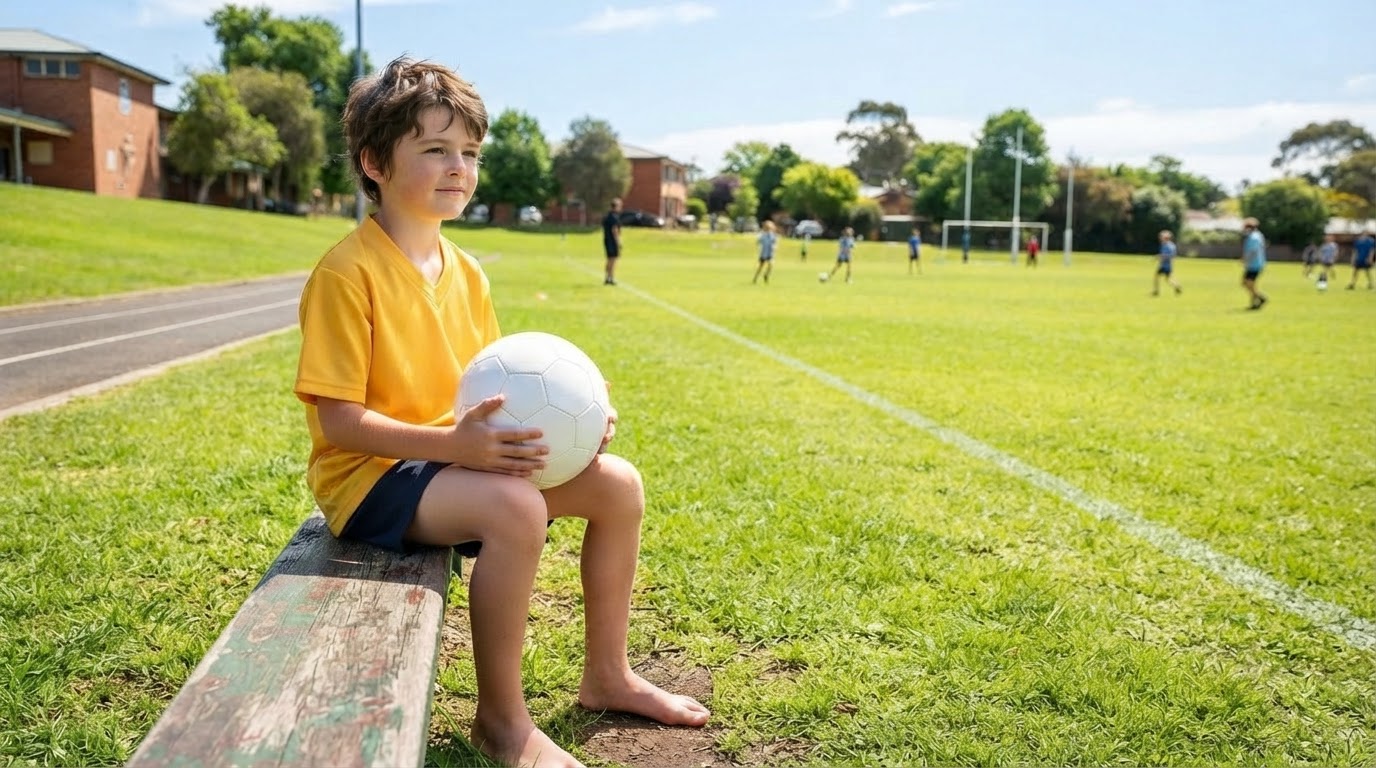
For some children, joining a sports team feels exciting. For others, it can feel like being dropped into a game where everyone else already knows the rules.
They may struggle to catch or kick a ball, tire sooner than their friends or find it difficult to coordinate several movements at once. Some children avoid sport altogether, while others participate but become frustrated because their body does not seem to do what they want it to do.
Being slower to get involved in sport does not necessarily mean your child is lazy, unmotivated or “just not sporty”. There may be physical, developmental or confidence-related reasons why sport feels more difficult for them.
A child’s physio can help identify what may be getting in the way and create a positive, practical plan to develop the skills your child needs.
Why Might a Child Be Delayed in Starting Sport?
Children develop movement skills at different rates. Some naturally take longer to learn skills such as running, jumping, throwing, catching or balancing.
There is also a big difference between enjoying movement and feeling ready for organised sport. A child might happily ride their bike or explore the playground but feel overwhelmed by the speed, rules and coordination required in a team environment.
Possible reasons a child may be slower to start or engage with sport include:
Reduced muscle strength or endurance
Difficulties with balance or coordination
Delayed gross motor skills
Joint pain or recurring discomfort
Hypermobility or reduced joint stability
A previous injury
Difficulty planning and sequencing movements
Low confidence after finding sport difficult
Fear of falling, being injured or making a mistake
Limited previous opportunities to practise movement skills
Sometimes several of these factors occur together. A child who finds ball skills difficult, for example, may begin avoiding games at school. With fewer opportunities to practise, the gap between them and their peers can feel even wider.
What Might Parents Notice?
The signs are not always obvious, particularly if a child has become good at avoiding the activities they find difficult.
You might notice that your child:
Hangs back during playground or sporting activities
Avoids games involving balls, running or jumping
Trips, falls or bumps into things frequently
Struggles to learn to ride a bike or scooter
Becomes tired more quickly than other children
Has difficulty keeping up with teammates
Complains of sore legs, feet, or joints during or after activity
Appears clumsy or awkward when learning new movements
Becomes upset or frustrated before sport
Says they dislike sport or are “bad at it”
It is important to listen to what your child is communicating. “I don’t want to play” can sometimes mean “I’m worried I can’t do it” or “It hurts when I try”.
Could Pain or Joint Problems Be Contributing?
Children do not always describe pain clearly. They may say their legs feel tired, ask to be carried, stop participating, or become irritable during an activity.
A paediatric physiotherapy assessment can help determine whether pain, reduced joint movement, muscle tightness, weakness, or a previous injury could be making sport uncomfortable.
A physiotherapist can also look at how your child walks, runs, jumps, and lands. This may reveal movement patterns that place additional strain on certain parts of the body or make particular sporting skills harder.
If the assessment suggests the symptoms require further medical investigation, your physiotherapist can recommend that you speak with your child’s GP or paediatrician.
Could Reduced Strength or Endurance Make Sport Harder?
Sport often requires children to run, jump, change direction and repeat the same movements for an extended period. A child with reduced muscle strength or endurance may manage these skills at first but tire more quickly than their teammates.
You might notice them slowing down, asking for frequent breaks, struggling to maintain their technique or becoming less coordinated as an activity continues. They may begin avoiding sport because keeping up feels exhausting rather than enjoyable.
A paediatric physiotherapist can assess whether strength or endurance is affecting participation. Therapy may then use fun, gradually progressed activities to build the physical foundations your child needs for their chosen sport. The aim is not to push them beyond their limits, but to help movement feel easier and more achievable over time.
Could Coordination Be Part of the Problem?
Sport requires the brain and body to manage many tasks at once. Consider how much is involved in simply catching a ball: watching its path, judging its speed, moving into position and coordinating both hands at precisely the right time.
A child with coordination difficulties may need more time, repetition or support to learn these skills. They may also find it difficult to plan a movement, copy an action or combine several movements into a sequence.
Coordination difficulties can occur for many reasons. In some cases, they may be associated with developmental coordination disorder, also known as DCD or dyspraxia. DCD can affect motor skills, including running, jumping and throwing a ball.
A physiotherapist does not assume that every child who struggles with sport has a particular condition. A thorough assessment helps identify the specific skills that are challenging and whether other professional input may be helpful.
How Can Children’s Physiotherapy Help?
At Brave Bodies, the process begins by getting to know your child. A paediatric physiotherapist will discuss their development, current activities, any pain or injuries, what they find difficult and what they would like to be able to do.
The physical assessment may explore:
Strength and muscular endurance
Balance and coordination
Flexibility and joint stability
Posture and body awareness
Walking and running patterns
Hopping, jumping and landing
Throwing, catching or kicking
Sport-specific movements
This allows the physiotherapist to create a plan based on your child’s needs rather than using the same program for every child.
Building Sporting Skills Through Play
Physiotherapy for children should not feel like a repetitive adult gym program.
Sessions may use obstacle courses, stepping challenges, targets, balloons, balls or imaginative games to practise important skills. A child might build leg strength by moving like different animals, work on balance while navigating a pretend river or practise throwing by trying to knock over a tower.
Depending on the child, a program might focus on:
Core, hip and leg strength
Balance on one foot
Safe jumping and landing
Running and changing direction
Hand-eye coordination
Throwing, catching and kicking
Gradually improving fitness and endurance
Exercises can then be incorporated into short, manageable activities at home. The aim is to give the child plenty of opportunities to experience success without making movement feel like a chore.
The Goal Is Participation, Not Sporting Perfection
Not every child wants to play competitive sport, and that is okay. Physical activity can include swimming, bike riding, dancing, martial arts, playground games, or simply being active with family and friends.
The Australian physical activity guidelines encourage children and young people to participate in a variety of enjoyable activities. Finding a form of movement that suits your child is often more valuable than pushing them into a particular sport.
At Brave Bodies, our approach to paediatric physiotherapy is playful, individual and focused on meaningful progress. Whether your child wants to join a team, participate more confidently at school or simply enjoy moving their body, we can help them build the foundations to get started.
Frequently Asked Questions
1. Why does my child avoid sport?
A child may avoid sport because they find running, balancing, catching or keeping up physically difficult. Pain, fatigue, a previous injury or low confidence may also contribute. Some children simply prefer other forms of movement, which is perfectly okay.
2. When should I consider children’s physiotherapy?
Consider seeing a children’s physiotherapist if your child frequently trips, tyres quickly, experiences pain, struggles with age-appropriate movement skills or regularly avoids physical activities they would otherwise like to try.
3. Can physiotherapy help my child become more coordinated?
Physiotherapy can help children practise the strength, balance, body awareness and movement skills that support coordination. Activities are tailored to the specific skills your child finds difficult, such as running, jumping, catching or changing direction.
4. What happens during a paediatric physiotherapy assessment?
The physiotherapist will discuss your concerns and observe how your child moves. They may assess strength, endurance, balance, coordination, joint movement and sport-specific skills before developing an individual plan based on your child’s goals.
5. Does my child need to play a competitive sport to stay active?
No. Physical activity can include swimming, dancing, bike riding, martial arts, playground games or active family outings. The goal is to help your child find movement they enjoy and can participate in confidently.